http://192.168.1.3 in the address bar. Use default credentials (usually admin/admin or admin/password) to access the admin panel. Change your password immediately for security. 192.168.1.3 Tool: Router Admin Login & Network Scanner
The 192.168.1.3 IP address is a private IP address often used as a default gateway for home routers. This means it’s the address you type into a web browser to access your router’s admin panel, where you can manage your WiFi network, change passwords, and view connected devices.
What is 192.168.1.3?
Think of 192.168.1.3 as the digital door to your router’s settings. It’s a private IP address, meaning it’s only accessible from within your own home network. For many routers, this address serves as the default gateway. When you type http://192.168.1.3 into a browser, you’re sending a request to your router to display its configuration dashboard, also known as the admin panel. This is where you go to change your WiFi password, set up a guest network, or troubleshoot connection issues.
How to Login to 192.168.1.3
Accessing your router’s admin panel is a straightforward process. Just follow these steps carefully:
- Connect to Your Network: Ensure your computer or smartphone is connected to your router’s WiFi network or directly via an Ethernet cable. You won’t be able to access the admin panel without an active connection.
- Open a Web Browser: Launch any browser, such as Chrome, Safari, Firefox, or Edge.
- Enter the IP Address: In the address bar at the top, type
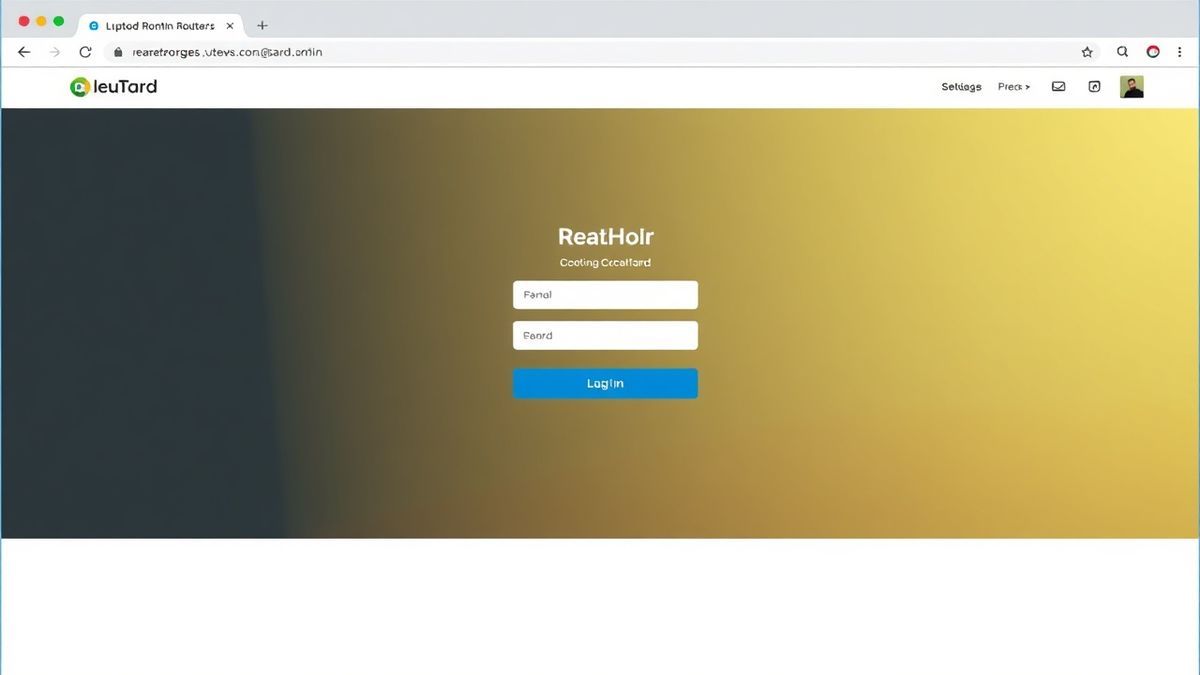
http://192.168.1.3and pressEnter. Make sure you use numbers and dots, not letters (e.g., avoid typing192.168.l.3). - Enter Login Credentials: A login page will appear, prompting you for a username and password. If you haven't changed them before, you'll need to use the router's default credentials.
Default Username and Password for 192.168.1.3
Most routers come with a default username and password set by the manufacturer. The most common combinations are:
-
Username:
admin -
Password:
admin -
Username:
admin -
Password:
password
If these don’t work, check the sticker on the back or bottom of your router. It often lists the unique default login information for your specific model.
Security Tip: Leaving your router with its default login credentials is a major security risk. Anyone connected to your network could easily log in and change your settings. It’s strongly recommended to change the admin password to a strong, unique one as soon as you first log in.
What You Can Do After Logging Into the Admin Panel
Once you’re logged into the admin panel at http://192.168.1.3, you have full control over your network. Here are the most common tasks:
- Change WiFi Password (Security Key): This is the primary way to secure your network. You can update your password to a new, complex one to prevent unauthorized access.
- Change WiFi Network Name (SSID): Personalize your network by changing its name. This makes it easier to identify among nearby networks.
- View Connected Devices: See a list of every device currently connected to your WiFi. This is a great way to spot intruders or see if guests are still connected.
- Update Router Firmware: Router manufacturers release updates to improve performance, fix bugs, and patch security vulnerabilities. You can check for and install these updates from the admin panel.
- Set Up a Guest Network: Create a separate WiFi network for visitors, keeping your primary network and its connected devices more secure.
Troubleshooting: Why 192.168.1.3 Isn't Working
It’s common to run into issues when trying to access your router. Here’s how to fix the most frequent problems.
Cannot Access 192.168.1.3 (Page Not Loading)
If the page won’t load, it could be for a few reasons.
- Wrong IP Address: Your router might be using a different default gateway. Many use
192.168.1.1or192.168.0.1.- Solution: Open the Command Prompt on Windows (type
cmdin the Start menu) or Terminal on Mac. Typeipconfig(Windows) ornetstat -nr | grep default(Mac). Look for the number next to “Default Gateway.” That is your router’s IP address.
- Solution: Open the Command Prompt on Windows (type
- Connection Issue: Your device may not be properly connected to the network.
- Solution: Verify your WiFi or Ethernet connection. Try disconnecting and reconnecting.
Login Failed
If the login page appears but your username and password are rejected, it’s usually a credentials issue.
- Incorrect Password: You may have forgotten a password you changed earlier.
- Solution: Try the default credentials listed on your router’s sticker. If you’ve changed them and forgotten them, you’ll need to perform a factory reset on the router (see below).
- Caps Lock: Passwords are case-sensitive.
- Solution: Ensure the Caps Lock key on your keyboard is off.
IP Address Conflict
The 192.168.1.3 address might be assigned to a device on your network (like a computer or printer) instead of your router. This creates a conflict.
- Solution: A simple restart can often fix this. Unplug your router and modem, wait 30 seconds, then plug the modem back in, followed by the router. Once they are fully restarted, try accessing
http://192.168.1.3again.
Forgot Router Admin Password (Factory Reset)
If you’ve tried everything and still can’t log in, a factory reset is the last resort. This will erase all your custom settings, including your WiFi name and password, and restore the router to its original state.
- Solution: Find a small, recessed button on the router labeled “Reset” or “Factory Reset.” Use a paperclip to press and hold this button for about 10-30 seconds until the lights on the router flash. After it reboots, you can log in using the default credentials from the sticker.

Frequently Asked Questions
How do I login to 192.168.1.3?
Open a web browser, type http://192.168.1.3 in the address bar, and press Enter. Then, enter your router’s username and password. If you’ve never changed them, try the default credentials (often admin/admin).
Why is 192.168.1.3 not working?
This usually happens because your router uses a different default gateway (like 192.168.1.1), you’re not connected to the network, or there’s a typo in the address (e.g., 192.168.l.3). Check your device’s network connection and find your default gateway using the Command Prompt (ipconfig).
What is the default password for 192.168.1.3?
There is no single universal password. The most common defaults are admin and password. However, the correct credentials are usually printed on a sticker on the router itself.
How do I change my WiFi password using 192.168.1.3?
First, log in to the router admin panel using the steps above. Once inside, look for a section called “Wireless,” “WiFi,” or “WLAN.” Find the field labeled “WiFi Password,” “Passphrase,” or “Security Key,” enter your new password, and click “Save” or “Apply.”
What is the difference between 192.168.1.3 and 192.168.1.1?
Both are private IP addresses in the same range. Your router uses one of them as its default gateway (its own address). While many routers use 192.168.1.1, some use 192.168.1.3. The specific address depends on the router’s manufacturer and model.
Is 192.168.1.3 a public or private IP address?
It is a private IP address. This means it is only valid within your local home network and cannot be accessed from the public internet, providing a layer of security for your internal devices.
How do I find my router's IP address if it's not 192.168.1.3?
On Windows, open Command Prompt and type ipconfig. Look for “Default Gateway.” On a Mac, go to System Settings > Network > Wi-Fi, and click “Details” next to your network to see the “Router” address.
🔒 Security Reminder
After logging into your 192.168.1.3 router, always change the default password to protect your network from unauthorized access. Use a strong password with at least 12 characters including letters, numbers, and special symbols.